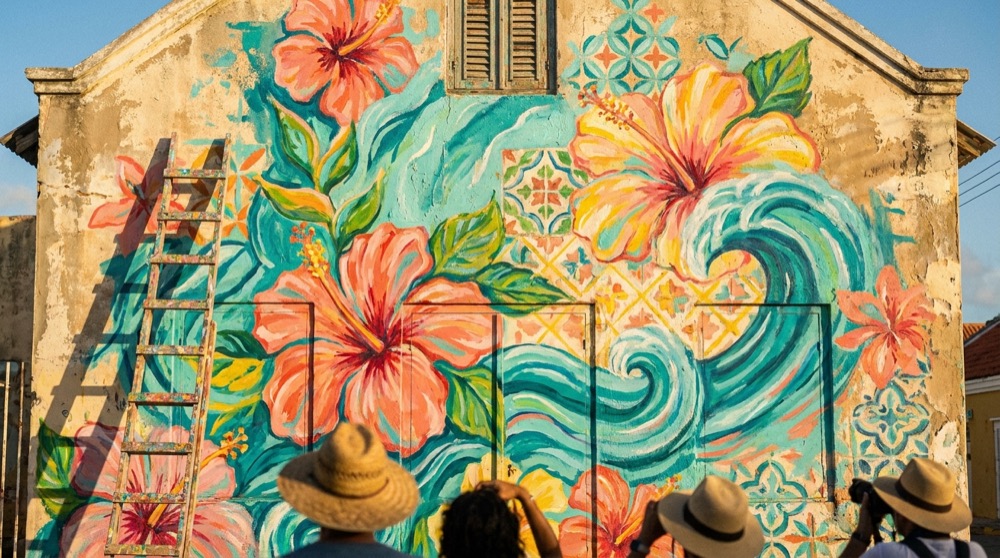
San Nicolas is the street-art capital of the Caribbean. That's not marketing talk. Aruba's second city holds the region's densest concentration of large-scale murals, painted by artists from more than a dozen countries across the walls of a town that oil built, abandoned, and art brought back to life.
The San Nicolas and Baby Beach Day
A narrated drive down the coast, these murals as a 9-stop essentials walk, or 14 with the extras, and the road to Baby Beach. 26 stops that play by themselves as you arrive. Works offline, one price for the whole car; by bus the road stories play too.
How a refinery town became an open-air gallery
To understand the murals, you need the backstory. In 1924, the Lago oil refinery opened here and turned San Nicolas into one of the richest communities in the Caribbean. Workers arrived from over fifty nations, bringing their food, music and languages, the melting pot that still gives San Nicolas a soul unlike anywhere else in Aruba.
Then, in 1985, the refinery closed. The jobs vanished, families left, and Aruba's tourism boom happened on the other side of the island. People started calling San Nicolas "the forgotten city."
The turnaround began in 2016, when local visionary Tito Bolivar launched the Aruba Art Fair and invited international street artists to paint the town's empty walls. Year after year, the festival added murals, giant birds, portraits of elders, tributes to the town's multicultural history, until the walls themselves became the attraction.
What you'll see
- The bird walls, flamingos, troupials (Aruba's national bird), owls and more, hiding across several facades including one very unexpected government building.
- Portraits of the community, larger-than-life elders and children that honor the generations who kept the town alive through the quiet years.
- The "Greetings from Aruba" postcard wall, the town's most photographed mural, painted like a giant vintage postcard. Golden hour makes it glow.
- Silence Project by Flor Mayoral, a wall of faces near the Visitor Center with one shared message you'll have to see for yourself.
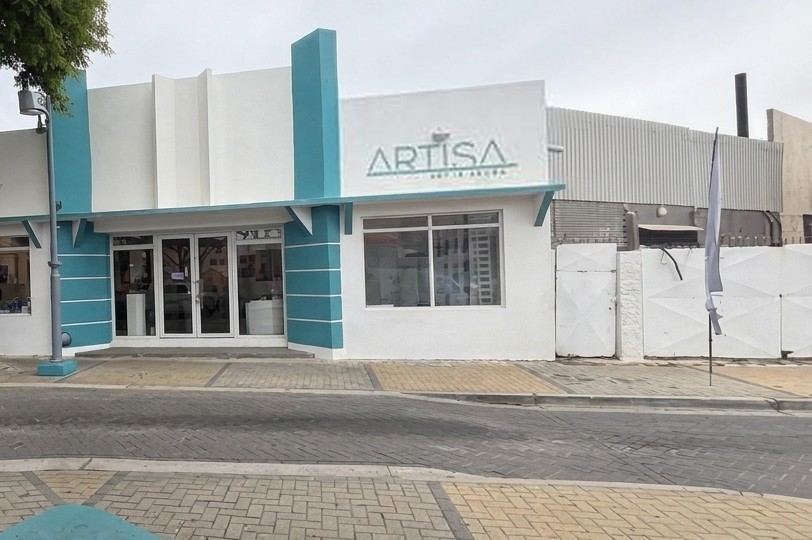
The movement's home base is ArtisA ("Art is Aruba"), the little white-and-teal gallery where the Art Fair was born. If it's open, step inside, it's the heart of the whole story.
The best route
Most murals cluster within a walkable 1.2 km loop around the main street (Zeppenfeldstraat), the police station block, and the streets between the promenade and the Visitor Center. You can wander freely, or follow a structured route that strings the best walls together with the story behind them.
See it as a game, not just a walk
We built The San Nicolas and Baby Beach Day exactly for this: a self-guided audio tour where every one of these walls is a narrated stop, plus the drive in along the coast and the road on to Baby Beach. The stories play by themselves as you arrive. One price ($14.99) covers your whole car.
Walk it with the secrets unlocked
26 stops from the coast road to Baby Beach. $14.99 per car.
Get the San Nicolas audio walk, $14.99